Wednesday, 16 May 2012

The Morality of Pocket Novel World By Sally Quilford

The first exercise and discussion in my pocket novel workshops involve the morality of pocket novel world. I spend a long time on it because, as my fellow Pocketeers will tell you, it is something that is so easy to get wrong.
We’ve all discussed at some point that pocket novel world is a rose-coloured world where nothing really bad ever happens. Even in my romantic intrigue where a murder takes place, it is all done ‘offstage’ and no one the reader may have come to like dies. I’ve heard that People’s Friend are looking for crime stories, but have no idea whether murder might be included in that. I suspect not, and that we’re looking more at cosy, victimless crimes.
It goes without saying that neither the hero or the heroine can be promiscuous, or ever have been, and neither should either be married or involved in a relationship with someone else during the course of their romance. I have to say I don’t like virgin heroes (preferring a man who knows what he’s doing), so I may hint that my hero is not inexperienced in matters of the bedroom … ahem. On the other hand, I don’t like a male slut either, so I also make it clear that he respects women and hasn’t slept around. Other times I don’t bother explaining it at all, and let the reader make up their own minds.


Of course he's a virgin ...
(apologies for the lack of vest, fellow 'Bruce in his vest' lovers, but I think the chest more than makes up for it)

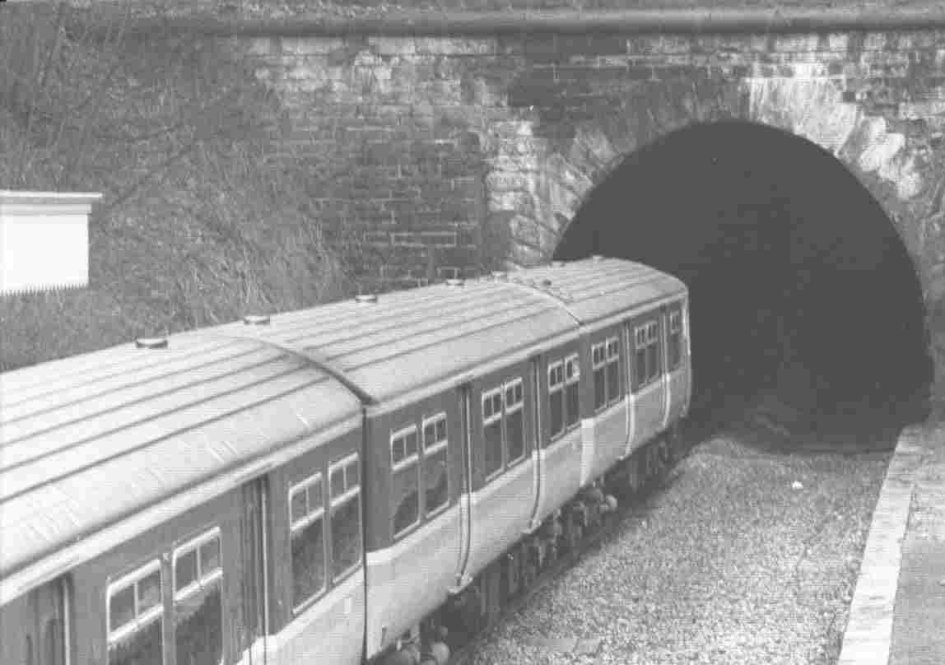
Sex should always remain behind closed doors in My Weekly novels. In People’s Friend novels, don’t mention it at all, especially outside of marriage. Think waves crashing on the sand, or trains going into tunnels (okay, perhaps not the latter if you’re prone to the vapours). Kisses can be ‘passionate’, but don’t include tongues, and never overtly mention sexual arousal or use sexual language, not even euphemism.
Well I never...

I was asked whether the heroine could be an unmarried mother. In this instance, I would always err on the side of caution. It takes only a couple of sentences to turn her into a young widow, and she is still coping with the demands of single parenthood, plus you have that extra bit of depth to her character.
Can the hero or heroine be illegitimate? I think this could be done in a subtle way. If you have them brought up in an orphanage or a children’s home (or with relatives) you don’t have to explain their parentage at all. Leave it to the reader to fill in the gaps. A lot of my heroines are orphans, though mainly because it saves me having to create a family for them, and also gives her a certain pathos as she sets out alone in the world.

I was also asked whether one character (not a main character) could be an alcoholic. I don’t think there’s a problem with My Weekly Pocket Novels as long as it is again done with subtlety and it’s made plain that the behaviour is frowned upon.
As the novels are meant to be warm-hearted and rose-tinted, it’s really best to leave things like drugs and alcohol out if you can. This doesn’t mean that your hero and heroine can’t go out for a meal and a glass of wine. Just don’t show them overindulging.

Maggie at My Weekly doesn’t mind a paranormal romance, but prefers there to be a rational explanation, and also that the story is historical. I’d avoid paranormal completely for People’s Friend. They don’t like spooky stories in their weekly magazine and I’m pretty sure they won’t like them in their pocket novels (unless anyone can tell me any different?)
One good source of guidance is the Hays Code, which used to govern film-making. It’s an old joke about the hero having to keep one foot on the floor during a love scene, and I’m sure we’ve all seen films set in the 40s and 50s, where husbands and wives sleep in twin beds.

The details of the Motion Picture Production Code (to give it its official name) are on Wikipedia and are a useful guide to what the readership of MW or PF pocket novels are comfortable with. I am very relieved to say that the rules governing interracial romances don’t have any place in pocket novel world. One of my heroes was part-Cherokee and I was delighted last year when I saw a People’s Friend Pocket Novel with a very pretty black heroine on the front cover. More recently the heroine on the cover of a My Weekly novella set in the civil war was mixed race, and I have an idea for a story featuring my own mixed race heroine, Rachel Jensen who starred briefly in Mistletoe Mystery.

Whilst the Hays Rules may sound Draconian, they can actually lead to some very subtle writing. It’s well known, I think, that I am a big Hitchcock fan. But I always contend that Hitchcock’s films were much better when he had to stick to censorship rules. You only have to compare a film like Psycho (where you only think Janet Leigh is naked in the shower) with the dreadful 1970s film, Frenzy, (which has a gratuitous and almost titillating rape scene), to see why. When the Hays Code was in force, writers had to be more creative about dealing with sensitive subjects. This subtlety can actually add to your writing, rather than detract from it. I actively encourage my workshop participants to watch films from the 30s, 40s and 50s to see how this is done. As it says on the Wikipedia page, Casablanca would have been a completely different film had Rick and Ilsa and run off together, instead of him doing the noble thing and giving her up to the greater good.

Besides, the brims of their hats would soon stop any shenanigans in the kissing department.
Much depends on the imprint you’re writing for. I think my fellow Pocketeers would agree that People’s Friend tend to be far stricter about morals than My Weekly. And if any of them know any different, I’d like to hear it. A fellow writer told me that her 90 year old grandmother loves the novels because of the world they present. There’s enough nastiness in the real world, without it turning up in the books that people of her generation love.
However, things they are a-changing and I've heard that the My Weekly Pocket Novel editor is asking for slightly stronger storylines, with lost babies etc. My advice, however, would be to err on the side of caution, and let the editor be the one to ask for changes. That way she can advise you how to pitch it correctly, and you won't make any mistakes.

Wednesday, 9 May 2012

I'm delighted to tell you that my fourth book for People's Friend was released last week. I love this cover -so evocative and exactly right for the story. I've posted a blurb and short extract - I hope you enjoy them enough to buy the actual book. I'm sure it's still available. best wishes Fenella **************************************************************************************** Lydia Peterson is content to run her stud farm and remain single, the last thing she wants is an autocratic brother-in-law interfering with her life even if he is the most attractive man she is ever met. Colonel Simon Wescott, on leave from the Peninsular War, believes that a wife has no place in a soldier's life until he comes into contact with his infuriating, headstrong sister-in-law. However when a series of dramatic events throw them together and both their lives are endangered they are forced to reconsider their first impressions. Will Simon be able to compromise his duty to put King and country first in order to save Lydia's life? Can she give up her independence and become a soldier's wife? ***************************************************************************************** Lydia grabbed at the strap as the carriage tilted alarmingly but failed to stop her undignified slide into the well of the vehicle. Her maid landed heavily on top of her. For a moment she lay winded, unable to move, terrified the vehicle would go completely over. 'I beg your pardon, miss, I couldn't stop myself from falling.' 'It's not your fault, Martha, I think we must have broken an axle, I sincerely hope the horses are unharmed.' With some difficulty she extricated herself and stood up. 'At least we are both in one piece. If I balance on the edge of the seat I believe I might manage to open the door.' She attempted the maneuver and the coach rocked alarmingly. 'Please don't do that, Miss Peterson, you'll likely have us right over.' 'Why doesn't Sam come to our aid? I believe he might have taken a tumble from the box and be lying injured in the road. As Billy went ahead to order refreshments at the White Queen, there's no one to tend our coachman. I must get out.' This time her struggles sent the coach crashing right over. Her world turned upside down, her legs and arms became entangled with Martha's and it was several minutes before she was able to get both of them upright. The doors were now the floor and ceiling, the squabs pointing into the air. The sound of her precious horses panicking meant she had no option. If she did not get out and release them from the harness they would likely break a leg. Suddenly Martha screamed and pointed downwards, Lydia saw water seeping in through the door that now acted as the floor. They must have turned over into the ditch that ran alongside of the road. 'Hold on to something, Martha, I must climb out this instant. I think if I could step on your knee I might reach the door handle somehow.' Her smart travelling ensemble was ruined, the hem already saturated with muddy water, her spencer in no better case. Her lovely new bonnet was hanging in disarray around her neck, her sister had been most insistent that she dressed in her best to meet the colonel as the much longed for visitor was to arrive today as well. She was not going to impress anyone now. The whinnying and stamping from the team had stopped. Was this a good or bad sign? Before she had time to consider the door above her head was slammed back and a gentleman appeared in the space. It was impossible to see his features clearly, but from his voice he was obviously well-to-do. 'Why couldn't you stay still, ladies? You have turned a minor accident into a major disaster. I have released your horses and attended to your coachman, however now that you've managed to tip the carriage right over there is nothing I can do to get you out without assistance. You must stay in here.' The incredibly rude gentleman vanished as suddenly as he'd appeared leaving Lydia standing up to her boot tops in freezing water. 'Come back here this instant, sir, you cannot abandon us in here.' He slammed his fist against the carriage and shouted back. 'I cannot right the vehicle unaided, neither can I pull you out through the door. You will come to no harm, the ditch is shallow, I shall be back as soon as I can.' Then he was gone, only the sound of hoof beats echoing in the cold winter air to keep her company. This was no gentleman, he had callously left her and Martha without making a serious attempt to rescue them. He could be gone hours, what about poor Sam unconscious on the side of the road? She would not remain incarcerated here a moment longer. 'Martha, let me stand on your knee. If you brace yourself against the seat I'm certain I can scramble out.' 'It's a good thing you're not a short as me, miss, I'd not reach even if I tried.' With her maid to use as a stool she grasped the edges of the open door. 'Martha, give me a push, I think I can do it then.' Her feet were grasped firmly and she was rising steadily, throwing herself forward she tipped headlong through the door and slithered, skirts and petticoats flying, down the side to land with a thud in the road. Can Lydia keep her independence and the man she loves?

Wednesday, 2 May 2012

Bread, Coffee and Cupcakes


I attended a cupcake decorating class at the weekend. Bear with me – this is writing-related!
At the time I wished I hadn’t agreed with a friend to go. Wouldn’t I have been better spending the time writing? As it turned out the answer to that was no.
     When I wrote later that day, I found my writing more energised, more inspired and more creative. I had been struggling with my WIP over the last week, finding myself repeating words and having mental blocks with the plotting. Suddenly I was away like a shot, the words flowing out onto the paper. Somehow, doing something completely different had refreshed my ‘writing muscle’ in a positive way.
     I have a writing friend who likes to make bread in the mornings before writing (she’s lucky enough not to have to work). She finds the act of kneading the bread releases ideas for her writing day ahead. Other people use different rituals – maybe making coffee or walking the dogs to get them started. Then the blank page doesn’t look quite so daunting when you already have a notion in your mind of how to begin.
    If you find that your writing is grinding to a halt, you may find it beneficial to put it in a drawer for the day and do something completely different. Or add a non-writing element to the start of your day.
I could start making cupcakes on all my days off – but that’s a dangerous road to go down...


Wednesday, 25 April 2012

The Dreaded Synopsis

The Dreaded Synopsis

Ask any author which bit they most hate writing and the chances are they will say it’s the synopsis. Tied firmly in with plotting, it is some sort of commitment to the storyline. Many people I know actually write the synopsis at the end but if you want to pitch a novel with a partial, (a few chapters only) this can often be impossible without a synopsis. We have discussed before how some people always finish a story before sending in even the partial. I like to know that what I’m writing is likely to be accepted before spending too much time on it, so I send a partial, three chapters or so, before I finish a book. Even though the partial may be approved, there are still no guarantees the final product will be accepted. However many books are behind you, the current work is only as good as it an editor considers!

So, what is the function of the synopsis? It should clarify the story’s drive, give an outline of the main characters and show the potential publisher how it all hangs together. Even three chapters may not be enough to show how the characters are going to turn out. Looking at a publisher’s guidelines, it become obvious that there are many different ways of producing the synopsis. Some require multiple pages with chapter outlines and huge amounts of detail. Others want an A4 page with the outline of the plot. Clearly, it is important to know exactly what is required before sending out material. Sadly, not all publishers or agents make it clear, so approaching a new publisher could be doomed at the outset if you get it wrong.

Writing the synopsis at the beginning of the work is really a form of plotting. If ever I do start with the synopsis, I rarely seem able to follow it all the way through. My characters develop their own lives, their own characters and often find them doing something quite unexpected. This can take the plot into a different route entirely. I may have the idea of what is to happen eventually and even begin to write that bit, far too early. The synopsis then has to change to accommodate this. I suppose I am saying that I don’t really like to plot in too much detail as this doesn’t leave the scope for developing characters to drive the story themselves.


My most recent People’s Friend Pocket Novel was the fourth in what started as a one off and turned into a series of five. My editor was enthusiastic about the series and didn’t want to see a synopsis at all. This was great and things kept happening unexpectedly (for me too) and made it a fast moving story to write and I hope, a good pace to read. Of course, this depends on an editor knowing a writer and both having a mutual trust. And dare I say it, on having reasonable experience.

Unlike the ‘blurb’ on the back of a book that is designed to draw in the reader, the synopsis must present the whole story and characters and is a key selling point for the book.

Dreaded or not, the synopsis exists to sell your work.

Wednesday, 18 April 2012

Fall seven times, stand up eight


A few short years ago we were hoping that one day we’d see our work in print, and now we are published writers. It's what dreams are made of. In spite of numerous rejections, 'turn downs' if you prefer, our perseverance has paid off. At times we have struggled to keep ourselves motivated; often we have considered quitting and each time we receive a rejection we ask ourselves where we are going wrong. Without the support and backing of each other and our writing group we would have given up by now.
After each rejection, the manuscript is put to one side while we consider why it wasn’t acceptable. Then we dust it down, re-read it, re-write according to the editor’s suggestions if we feel them appropriate, and send it off again.
We teamed up to write pocket novels, which we enjoy very much. It would be good to be more successful with them, but we are learning through reading, workshops and taking the good advice on this blog. Our fingers are crossed for the ones we have out with Maggie and Tracey at the moment.
If you are a writer and feeling despondent about your lack of success we hope we can encourage you to persevere with your writing. Whatever disappointments or setbacks you have, don’t give up.
Which bring us back to perseverance. According to the Chambers 20th Century Dictionary perseverance is: going on till success is met with.
Keep working at your writing and hopefully success will follow, but above all don’t let anyone steal your dream.

Tuesday, 10 April 2012

Our Books - in every genre

This time I'd like to explore not only the romance books we write for Pocket Novels but also what else each of us writes. And, more importantly, in today's competitive publishing world, how our readers find us.

This is a multi focus article, I guess, but I believe it is all connected. Naturally our attention on this blog is centred on our romantic pocket novels and primarily these are found in newsagents, corner stores, supermarkets, etc. The good thing is that they go on in many cases to have a further life in the form of large print romances in libraries and, for many of us also, as ebooks to get them out to an even wider audience. After all, we write from our own inner drive or need but also, ultimately, for readers to enjoy what we create.


It's amazing to learn how readers discover us. Pocket Novel readers will go to their usual retail sources each month but what about other books by that author or their backlist once the current novel is taken off the shelf and before a new one comes out? According to the Smashwords blog on ebooks, for example, 29% of readers discover your book via blogs and message boards, Facebook and so on. 18% go out and particularly look for their favourite author. I know I tend to do that. Find an author I love or who has been recommended to me, so I seek other titles by that writer.


Many good reads are simply found by browsing and 14% of readers find us that way. The very smallest percentages are retailer recommendations, free ebooks, sampling then downloading, reviews and bestseller lists.


I have to say, personally, I do a lot of browsing, mostly online, to find my historical and romance fiction. I would be interested to hear how others - both authors and readers - acquire books to add to their reading pile.


As for what else we pocket novelists write, I love Australian history, genealogy and the Middle Ages, so my works both published and planned reflect that interest. Besides my last pocket novel, WOMBAT CREEK, which comes out in large print in libraries in September, my latest release is an Australian historical saga/romance ebook, BARRATT'S RUN, set in the pastoral country of the lush Western District of Victoria, Australia, where I live. I'm hoping this will become available in print within a year. I've just finished writing a squatter saga about the Penross family dynasty set in the same region which is really book 1 of a planned 6 book series. Plus I have 4 novels planned in the medieval era, a few modern mainstream stories roughly drafted out and heaps more romance novels titled and planned.


I know my fellow pocketeers write all kinds of different genres so this is a great opportunity to hear more about them. Over to you ladies...


Wednesday, 4 April 2012

Real Characters in a Make-believe World

Following from Cara's blog last week, I was thinking about how we have to put totally believable characters into a make-believe world.

The headlines in the newspapers are usually all doom and gloom, but our little pocket novels are fairy stories where everything turns out right in the end. But not the fairy stories of Grimm or Hans Anderson, which are sometimes really dark, because we have to stay on the light side, even if our protagonists are faced with life-changing traumas. Fairy stories, according to my dictionary, are made-up stories designed to mislead. So how do we make them real?

Our hero must be charismatic, good-looking, and have a few flaws to make him human; the main storyline can be funny or poignant; but our heroine has to grab our hearts from the first moment we meet her. How much of ourselves we put into this creaure depends on the story, but she has to be believable.

Many years ago I read a chapter of a novel I was in the process of completing, to a writing group. My main character had been sexually abused as a child and everyone in the writing circle thought I was describing myself. It was a bit embarrassing because no one would believe I had made it all up and I got sympathetic looks for weeks afterwards, but it proves my character must have been totally believable, and that is all that matters.

Our stories don't have to be factual, we write fiction, but our readers have to believe every word we write. They have to believe there are gorgeous men out there who will fall head-over-heels in love with them, and they have to believe there will always be a happy-ever-after ending. That is what writing a pocket novel is all about.