Showing posts with label Sally Quilford. Show all posts
Showing posts with label Sally Quilford. Show all posts
Monday, 2 March 2015
Out Now - The Dark Marshes
My latest romance, a gothic tale of madness and murder, is out now on Amazon Kindle. You can get it for a reasonable 99p.

Tuesday, 26 November 2013
Writing in the Now
Writing in the Now
When I presented a workshop for the lovely Write Place
Writing School at the beginning of November, I touched briefly on ‘writing in
the now’ and wanted to explore that point further, because I didn't have much time in class to do so.
As it wouldn’t be fair to share my students’ ideas I have
come up with a scenario to explain what I mean. This is a bit off the cuff, so may not be perfect, though I did find I kept adding bits to it as the story grew!
Annie and James meet
in university when they join the same band, with Annie as the lead singer and
James as the lead guitarist/singer. They are each other’s first love, but at
the end of university life they go their separate ways because James decides to
move to America to pursue his musical career. Ten years later they meet up
again, and James is a huge star, whilst Annie is a backing singer, working to
keep a roof over her and her young son’s head. Annie is still hurt that James
left her and thought his career more important than their love and she is also
angry that he stole the song that they wrote together and which became his
biggest hit. She has been too proud to sue him for her rights and is certainly
not going to ask him now! It is revealed that James left because he had reason
to believe that Annie was cheating on him and he had taken the song as revenge.
When he meets Annie’s son, he automatically assumes the child is the other guy’s,
but Annie knows better. Not that she’s going to admit that to James after he
cheated her out of millions of pounds…
If you were writing the novel to this short summary, where would
you begin?
When one of the students came up with a scenario that charted
all her hero and heroine’s romantic life, I suggested to her that she would be
much better starting the story in the now; at the point where their conflict is
about to come to a head. That adds immediacy to a story, and helps speed up the pace of reading.
A chronological story that begins with the hero and heroine
falling in love, maybe getting married or living together for years before conflict rears
its ugly head may be more realistic. After all, in real life, falling in love and
getting married is generally the easy bit. It’s only afterwards when children and
the resulting lack of money come along that conflict starts. But if you started at the very
beginning, it would make the first chapters rather slow. Of course if your hero
and heroine do meet and are immediately faced with a conflict, then it will
speed up the pace. But if you’re describing a relationship that began then
ended several years before for some reason, the time to start the story is when
they meet again.
So if I were writing the story I’ve outlined above, I’d
start where Annie and James meet up again, at a recording studio perhaps. I’d
introduce the conflict from their past very quickly, avoiding
flashbacks, which also slow down the pace of a story. Let the past come out in
dialogue (whilst avoiding ‘information drop’).
There are some novels, particularly family sagas, in which
you can start from the year dot – or when the heroine was born – but even they
will hint at some conflict. Maybe the hero or heroine has displaced an elder
sibling or cousin who was due to inherit. Or there is a question over their
parentage that will inform the rest of their lives until such conflict is
resolved. Even then the story will more than likely jump forward ten years or
so at a time, missing out the boring bits.

It doesn’t matter if you’re writing historical romance. The ‘now’
is the ‘present’ time in any era. So in my novel, Loving Protector, the story starts
when the heroine and her family are saved from a highwayman by the dashing hero.
So yes, it is the first time they meet and then goes on to chart their romance,
but it very quickly sets up the conflict (the heroine’s nasty stepsister) and
hints at further conflicts. Plus the romance happens over weeks, not years. I’ve
heard criticism about romances that happen too quickly, but to me that’s what
writing romantic fiction is about. It’s about falling in love at first sight,
but being faced with a conflict that tests that notion.
If every romantic novel had the same pace as a real life
romance, then it would be very boring for the reader. It can be done, however. The
film Same Time Next Year by Bernard Slade, starring Alan Alda and Ellen Burstyn, used the conceit of a couple
meeting the same time every year to carry on an illicit romance, and it showed
how they both changed over the years. But each ‘episode’ of the romance took
place at the time they met – in the now - and missed out all the bits in
between, simply feeding information to the audience through dialogue.
So try to write in the now, when the real conflict begins.
That may well be at the beginning of a romance, but it may well be ten years down
the line when the hero and heroine meet again and are forced to deal with the
problems that parted them before.
Wednesday, 28 August 2013
Love and Death - Dealing with Big Themes in Light Romance
As a writer of romantic intrigue, my work includes two very
big themes; love and death. The love is, of course, the romance. The death,
usually a murder, is very often the catalyst that brings the hero and heroine
together. There may also be the fear of death, as there is in my book Midnight Train, where a group of people
are stuck on a runaway train bearing a nuclear device. Having a hero and heroine have to cling on to each other during a shoot out is a great way of bringing them together!

The main problem is how to deal with death in what is
essentially a light romance. The death,
like any conflict, has to have some bearing on the overall story. However, it
cannot be so close to the hero or heroine that it would be unrealistic for them
not to grieve for a while. In one of my stories (unpublished) I wanted to kill
off the heroine’s father partway through the story, but it occurred to me that
if I did that, it would change the tone of the story completely. She would be
too busy grieving for her father to fall in love, and if I rushed it, and had
her suddenly get over her father’s death within days, then she would not be the
heroine I had envisaged. For that reason, if heroines in my other stories have
dead parents, I make their deaths happen sometime in the shadowy past. That way
she can still be sorry she’s lost them, but she’s over the worst of the grief.
Writing a murder into a love story is usually a bit easier,
as it’s often a person that no one much likes, but who is connected to the hero
and/or heroine in some way that puts doubts on their relationship. Or they
disagree over the best way to deal with the murder. Or the murder just brings
them together to investigate; anything that ties the death/conflict to the
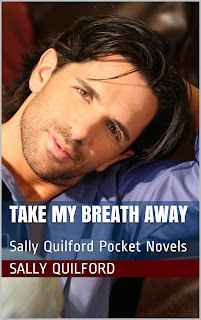
story. I bucked this trend in Take MyBreath Away by having the first murder victim as the rather likeable, but
hell-raising, ex-husband of my heroine, Patty Carter (I’m not giving anything
away here, it’s all in the first chapter!). However, whilst Patty mourned his
death, they had been split up long enough for her not to grieve in the same way
as if they’d had a long and happy marriage. So she is able to move on and connect
with the new hero in her life. The conflict comes from the hero thinking that
she’s the killer and what he’s going to do about it if that turns out to be
true. The important thing is that the reader is not dragged down by the
characters’ misery and grief.
There is a place for a more thoughtful and deep exploration
of love and death, but do remember we’re writing light romance here (or if you’re
not already writing it, you’re reading this blog because you may want to).
You could get over the issue of grieving over a death that
happens in the course of the story by having a time lapse of several weeks or
months. On the other hand, you don’t want them dealing with the loss of a close
loved one by recovering within days or in a time that seems too short to be
realistic to the reader.
A participant in one of my workshops had a scenario where
the hero’s wife had died just six months before he met the heroine. Now I know
that in real life people no longer wait a ‘respectable’ year before becoming
romantically involved with others, or even in getting married again (my
step-father moved his new girlfriend in on the night of my mother’s funeral!) but
in fiction, unless the hero’s wife was a real bitch, it would seem callous that
he suddenly found himself in love with another woman so soon after losing his
wife. Six months, for most people, is not enough to come to terms with the loss
of someone you loved dearly. I suggested to the writer that she makes it at
least a year, and possibly more since the first wife died, just to put that little
bit more distance between the death and the new romance. The hero could still
have the same doubts, and fear that he’s being unfaithful to the memory of his
first wife, but it tones down the angst a few notches so that the reader doesn’t
feel as though they’re drowning in tears.
One of my favourite books by Kate Walker examines the
feelings of a widower finding a new woman to love after the death of his wife,
but it’s been a while since the wife died, so the story isn’t bogged down by
his grief, even if he does have lots of feelings of guilt. What I particularly
liked was that Kate didn’t feel the need to demonise the wife to make the
heroine seem more important in the hero’s life.
So you can write about love and death, but if you want to
write light fiction, you need to use a lighter touch; one that doesn’t
undermine the sadness of death, but which also doesn’t make the reader feel like
slitting their wrists after five pages of the heroine lying on her bed thinking
about what a vale of tears her life has turned out to be.
Thursday, 6 June 2013
Free download for D-Day - Our Day Will Come

My wartime romance, Our Day Will Come, will be free to download today, to commemorate D-Day. It's not showing as free as I type this, but they're always a bit slow. So keep checking back and it will most definitely be free later today (usually sometime between 9am and 10am GMT).
Monday, 3 June 2013
Love Craft - How to Write Romantic Novels
I have created a short 'how to' book, called Love Craft, which as the title suggests is about writing romantic novels (not necessarily involving Cthulu type monsters!). It is the culmination of all the workshops I've done, and my own experience as a romance writer.

Join me on Facebook tomorrow for the Launch Party where I'll be answering questions about writing romance.
Wednesday, 3 April 2013
Characters and Moral Event Horizons
Some of you may be aware of the recent plagiarism suit
brought against Mills and Boon author, Kate Walker in relation to her novel,
The Proud Wife, which a wannabe writer (I'm deliberately not naming names here) claims Kate's novel was plagiarised from the unknown writer's unpublished novel. I’m not going to go into all that here, but you can read about it on the Pink Heart blog and the case notes
make very interesting reading on the subject of romantic tropes. There's also an interesting blog post here on 'original ideas' in fiction. There are certainly no original ideas in romantic fiction! But as a friend said to me the other day, new writers always think they've reinvented the wheel. I was the same when I was just starting out. You get on much better as a romance writer when you realise that the tropes are there, and all you can do is bring your own voice to them.
But what stood out for me about the case, and what led to this particular blog post, was that the heroine in
the unpublished novel seemingly threw herself down the stairs
deliberately to bring about a miscarriage. To be balanced about this, I don’t
know if it was intended to address this in the story so that it wasn’t actually
what happened.
But it did get me thinking about moral event horizons by
characters. A moral event horizon is
what a character crosses when they commit certain acts.
To me a heroine who harmed her baby in such a way would not
be at all sympathetic. I’m not talking about abortions here, as I do believe it’s
every woman’s right to choose (though I would suggest that in romantic fiction an abortion would be a hard sell). What I’m talking about is a deliberate and
violent act meant to bring about the end of the pregnancy because the heroine
was peeved at the hero for ending their relationship.
Of course some characters do cross the moral event horizon,
especially if they’re meant to be the bad guys/girls. It can be as simple as
kicking a puppy or as complicated as blowing up a building. But heroes and heroines are supposed to be above all that. I’ve often used the
example of James Bond. We may not care if he kills bad guy Blofeld, but God
forbid he should ever harm a hair on Blofeld’s cat’s head!
Really good television series can explore moral event
horizons. 24, starring Keifer Sutherland, often posed questions of right and
wrong, and grey and grey morality. Keifer, playing the hero, Jack Bauer, often
behaved in ways that were distinctly un-heroic. He tortured people, and even
shot one colleague because it would have caused the deaths of many more people
if he had not done so. No matter what Jack did, we saw the reasons for it and
we forgave him. Or if we didn’t forgive him, we understood the predicament he
was in. But Jack wasn’t a romantic hero. In fact most of his lovers died or
ended up in comas! I think this is another reason we forgave his
transgressions, because he always had to pay a heavy price for what he did.
Heroes and heroines in romance novels have to be heroic at
all times, and there are certain lines that they should never cross. When
reading through entries for an open romance writing comp (as a fellow
competitor, I should add, not as a judge!) I was put off by one hero who called
the heroine a ‘whore’. To me there is nothing heroic about a man who verbally abuses
a woman. Another story opened with the heroine being physically abused and myself and several others expressed a wish that a hero would come and save her, only to be told that this was the hero, who would turn out to be a 'nice guy' really. In my opinion, the fact of him
physically abusing the heroine in the opening chapter put him beyond the realms of redemption.
I think the problem with heroes is that some people think
that because a man is an alpha male, it means he has to be aggressive and
perhaps angry at the world until the heroine comes along and saves him. That’s not how it works. Alpha males protect their
mate and they protect others whom they love. They may have faults, but there
are lines that they should not cross and in my opinion verbal and physical
abuse is one of those lines.
Your hero and heroine are allowed to make mistakes, but they
must be forgivable mistakes. A young woman throwing herself down the stairs in
order to bring about a miscarriage is to be pitied perhaps, as she clearly has
psychological problems, but that would be a different story altogether and
perhaps not suited for the romance genre.
If she is the heroine of the story, she has to earn her
happy ending, and she can’t do that by behaving in a way that brings harm to a helpless child.

My latest ebook, LonesomeRanger (formerly published as Sunlit Secrets) is out this week, published by
Pulse Romance, (which is run by our very own Kate Allan). In that both my hero
and heroine make mistakes. My heroine, Connie, takes the role as schoolteacher
in the town of Ocasa based on a lie. She lets them think she is her older
sister, who has died en route to the town. Nate Truman, the hero, has a dark
and troubled past. They both make mistakes, but I hope that in the novel I’ve
given a damn good reason for those mistakes and that the reader can forgive
them, because essentially both are good, noble people.
It’s a balancing act, I think and you have to be
careful not to make the reader lose sympathy with the characters that you
really want them to be cheering for.
In pocket novels, which are set in a more rose-tinted world,
it is more important than ever that your hero and heroine don’t behave in a way
that turns the reader against them.
What, for you, would be a moral event horizon in a hero and
heroine? Do you have any examples of
heroes or heroines in romance books crossing that horizon? And if so, did they
manage to redeem themselves?
(It isn't my intention to bring a witch hunt against the wannabe writer in the Harlequin case, hence me not naming her in this piece. So please keep any comments on that subject civil and polite).
Thursday, 14 February 2013
Valentine's Day Freebie
I have a bumper batch of freebies for Valentine's Day. 11 of my Kindle Novels/novellas and 1 short story collection are free to download for today only.
Check out my blog for details.
Saturday, 19 January 2013
The Secret of Helena's Bay FREE today
My first ever pocket novel, The Secret of Helena's Bay, was my most borrowed books in libraries last year, with over 2300 loans. To celebrate that, I'm making the Kindle edition of the book FREE to download for today only.
At only 30,000 words, it's much shorter than the new style pocket novels. In fact you could easily read it in one sitting. So curl up in front of the fire with a nice hot mug of chocolate, and read about an idyllic Greek island full of mystery and romance!
We know that the Pocketeers have been a bit quiet over Christmas. In the next couple of days I'll be putting together a rota for us to start our Wednesday postings again, so look out for that!
Wednesday, 16 May 2012
The Morality of Pocket Novel World By Sally Quilford
The first exercise and discussion in my pocket novel
workshops involve the morality of pocket novel world. I spend a long time on it
because, as my fellow Pocketeers will tell you, it is something that is so easy
to get wrong.


We’ve all discussed at some point that pocket novel world is
a rose-coloured world where nothing really bad ever happens. Even in my
romantic intrigue where a murder takes place, it is all done ‘offstage’ and no
one the reader may have come to like dies. I’ve heard that People’s Friend are
looking for crime stories, but have no idea whether murder might be included in
that. I suspect not, and that we’re looking more at cosy, victimless crimes.
It goes without saying that neither the hero or the heroine
can be promiscuous, or ever have been, and neither should either be married or
involved in a relationship with someone else during the course of their romance.
I have to say I don’t like virgin heroes (preferring a man who knows what he’s
doing), so I may hint that my hero is not inexperienced in matters of the bedroom
… ahem. On the other hand, I don’t like a male slut either, so I also make it
clear that he respects women and hasn’t slept around. Other times I don’t
bother explaining it at all, and let the reader make up their own minds.
Of course he's a virgin ...
(apologies for the lack of vest, fellow 'Bruce in his vest' lovers, but I think the chest more than makes up for it)
Sex should always remain behind closed doors in My Weekly
novels. In People’s Friend novels, don’t mention it at all, especially outside
of marriage. Think waves crashing on the sand, or trains going into tunnels
(okay, perhaps not the latter if you’re prone to the vapours). Kisses can be ‘passionate’,
but don’t include tongues, and never overtly mention sexual arousal or use
sexual language, not even euphemism.
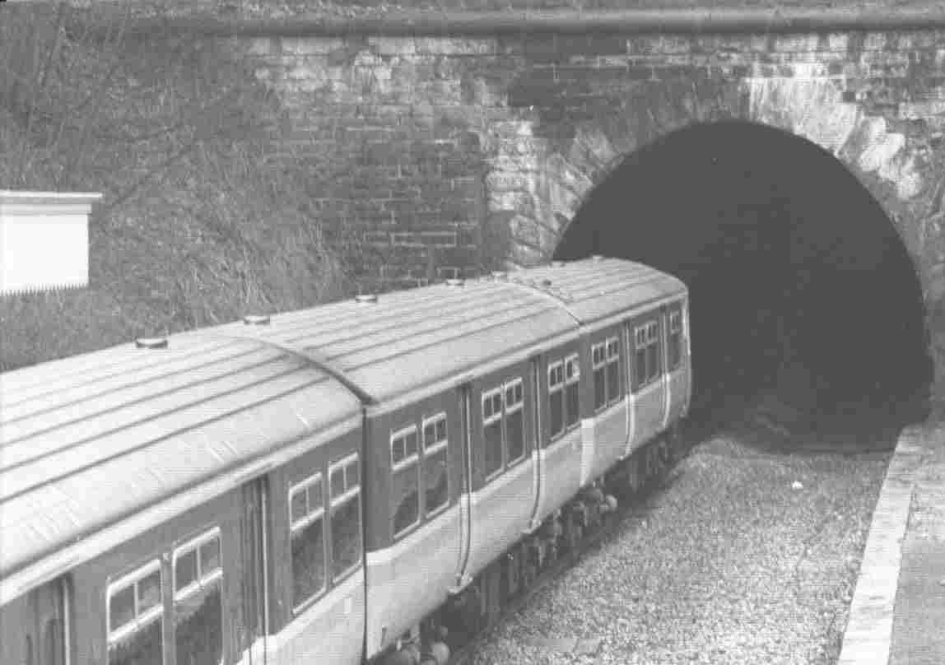
Well I never...
I was asked whether the heroine could be an unmarried
mother. In this instance, I would always err on the side of caution. It takes
only a couple of sentences to turn her into a young widow, and she is still
coping with the demands of single parenthood, plus you have that extra bit of
depth to her character.
Can the hero or heroine be illegitimate? I think this could
be done in a subtle way. If you have them brought up in an orphanage or a
children’s home (or with relatives) you don’t have to explain their parentage
at all. Leave it to the reader to fill in the gaps. A lot of my heroines are
orphans, though mainly because it saves me having to create a family for them,
and also gives her a certain pathos as she sets out alone in the world.
I was also asked whether one character (not a main
character) could be an alcoholic. I don’t think there’s a problem with My
Weekly Pocket Novels as long as it is again done with subtlety and it’s made
plain that the behaviour is frowned upon.
As the novels are meant to be warm-hearted and rose-tinted,
it’s really best to leave things like drugs and alcohol out if you can. This doesn’t mean
that your hero and heroine can’t go out for a meal and a glass of wine. Just
don’t show them overindulging.
Maggie at My Weekly doesn’t mind a paranormal romance, but
prefers there to be a rational explanation, and also that the story is
historical. I’d avoid paranormal completely for People’s Friend. They don’t
like spooky stories in their weekly magazine and I’m pretty sure they won’t
like them in their pocket novels (unless anyone can tell me any different?)
One good source of guidance is the Hays Code, which used to
govern film-making. It’s an old joke about the hero having to keep one foot on
the floor during a love scene, and I’m sure we’ve all seen films set in the 40s
and 50s, where husbands and wives sleep in twin beds.
The details of the Motion Picture Production Code (to give it its official name) are on Wikipedia
and are a useful guide to what the readership of MW or PF pocket novels are
comfortable with. I am very relieved to say that the rules governing
interracial romances don’t have any place in pocket novel world. One of my
heroes was part-Cherokee and I was delighted last year when I saw a People’s
Friend Pocket Novel with a very pretty black heroine on the front cover. More recently the heroine on the cover of a My Weekly novella set in the civil war was mixed race, and I have an idea for a story featuring my own mixed race heroine, Rachel Jensen who starred briefly in Mistletoe Mystery.
Whilst the Hays Rules may sound Draconian, they can actually
lead to some very subtle writing. It’s well known, I think, that I am a big
Hitchcock fan. But I always contend that Hitchcock’s films were much better
when he had to stick to censorship rules. You only have to compare a film like Psycho (where you only think Janet Leigh
is naked in the shower) with the dreadful 1970s film, Frenzy, (which has a gratuitous and almost titillating rape scene),
to see why. When the Hays Code was in force, writers had to be more creative
about dealing with sensitive subjects. This subtlety can actually add to your
writing, rather than detract from it. I actively encourage my workshop
participants to watch films from the 30s, 40s and 50s to see how this is done. As
it says on the Wikipedia page, Casablanca
would have been a completely different film had Rick and Ilsa and run off
together, instead of him doing the noble thing and giving her up to the greater good.

Besides, the brims of their hats would soon stop any shenanigans in the kissing department.
Much depends on the imprint you’re writing for. I think my
fellow Pocketeers would agree that People’s Friend tend to be far stricter
about morals than My Weekly. And if any of them know any different, I’d like to
hear it. A fellow writer told me that her 90 year old grandmother loves the
novels because of the world they present. There’s enough nastiness in the real
world, without it turning up in the books that people of her generation love.
However, things they are a-changing and I've heard that the My Weekly Pocket Novel editor is asking for slightly stronger storylines, with lost babies etc. My advice, however, would be to err on the side of caution, and let the editor be the one to ask for changes. That way she can advise you how to pitch it correctly, and you won't make any mistakes.Wednesday, 14 March 2012
Are Cliches Always The Thin End Of The Wedge? By Sally Quilford
One of the participants on my Online Pocket Novel Workshop said
that she hoped to learn to write happy endings that weren’t clichéd.


My first bit of advice was to accept that romances, by their
very nature, are clichés. Until you accept that, it will be impossible for you
to write them because you’ll be trying to break a mould that does not need to
be broken. When readers pick up a romance they expect certain things. They expect a heroine they'll root for, a hero they'll fancy and a Happy Ever After that brings the two together.
A traditional romance, even if it’s updated a la Bridget Jones’s Diary, is always going
to be some variation of girl-meets-boy, girl-loses-boy, girl-gets-boy back
again. Happy endings in themselves are clichés. After some big misunderstanding
or other conflict (without which you wouldn’t have a story worth reading), the
hero and heroine get back together, kiss and then (either metaphorically or
literally) go off into the sunset together.

Oh for a happy ending with Colin!
If you’re scoffing at this, then you’d probably also scoff
at the readership who enjoy and expect these sort of endings. Mills and Boon
are still going strong after 100 years by giving readers what they want. My
Weekly Pocket Novels and The People’s Friend pocket novels still fly off the shelves
every fortnight because the editors (and writers) are giving readers what they want.
It’s a rose-coloured world that probably has never existed in real life, but it’s
what makes them happy for however many hours it takes them to read the novels. They
close the books feeling, if only for a short time, that all is well with the
world. They might not have much to smile about in the real world, but they’ve
been able to escape it for a while into a world where everything happens exactly
as it should happen.
So don’t underestimate the power of clichés. Clichés are
comforting, like putting on an old jumper that might be a bit baggy and years out
of fashion, but is still the most comfortable piece of clothing you have ever
owned.
So knowing all this, can you still make your stories less
hackneyed? I think you can. In a novella I’ve just had accepted by Siren, the
hero and heroine literally do ride off into the sunset together on a horse. But
when you figure in that my heroine is terrified of horses, as shown earlier in
the story, it takes on a whole different meaning. It’s a way of showing that she
feels safe with the hero and trusts him not to let any harm come to her. So
perhaps not so hackneyed after all. At least that was my intention when I wrote
it. Whether readers will think ‘God that's corny' is another matter.

If it's good enough for Indiana Jones...
And this is perhaps one way of making sure a story and the happy ending that ensues isn’t
clichéd or hackneyed. It will always have to fit in with what’s gone before, so
pick one nugget of your story that may have just been used to show character
development, and base the happy ending around that. Do remember that the ending
must always come from the story, and not be suddenly tagged on because you’ve
remembered you have to get the hero and heroine together by the end.
One of my least favourite types of romance is where the hero
is absolutely awful to the heroine thoughout the story, then suddenly realises
he loves her, apologises and, more astoundingly, is forgiven, regardless of
what has gone before. But apparently this goes down well with some readers in
parts of the world. A hero can be downright evil to the heroine all the way
through, as long as he has the epiphany at the end and becomes a nicer person because
of his love for her. If I were the heroine in that story, I’d need more than an
apology to make me realise that this abusive man is the one I want to spend the
rest of my life with.
Maybe this is why I like writing pocket novels. Such a hero or
ending would never be permitted. Yes, they might be clichéd, and like that comfy old jumper, but that’s what keeps me writing them, and what keeps readers
reading them.
I end by advising you to check out the TV Tropes page, which affectionately lists all the tropes (or cliches) used in fiction, film and televison, and also proves that romance writing isn't the only type of fiction that has cliches. It's a great way of learning what's gone before and finding out how you can play with those ideas for your own story.
I end by advising you to check out the TV Tropes page, which affectionately lists all the tropes (or cliches) used in fiction, film and televison, and also proves that romance writing isn't the only type of fiction that has cliches. It's a great way of learning what's gone before and finding out how you can play with those ideas for your own story.
Sunday, 12 February 2012
Command Performance - another giveaway
To celebrate my Cat-Rom Command Performance making it to Amazon.co.uk and Amazon.com I've got another giveaway over on my blog. Simply put 'pick me' or words to that effect in the comments for a chance to win.
Command Performance Giveaway
Command Performance Giveaway
Saturday, 4 February 2012
Discussion on my blog today - Crossing Over To The Light Side
The discussion on my own blog today is related to writing pocket novels as it grew from a discussion in my current Pocket Novel Workshop. It deals with the problems of staying on the light side of writing.
Saturday, 14 January 2012
Unashamed plug for Command Performance
 |
| Command Performance available from Bookstrand Romance
Not a pocket novel, but a new ebook by me, called Command Performance, which is available from Bookstrand Romance. (and will be available from Amazon in a week or two). Those familiar with the New Voices comp from Mills and Boon might remember this as The Venetian's Command Performance, which was my entry the year before last. It didn't get anywhere but lots of people asked me to finish the story of Vittorio and Lindi ... okay about five people asked, but it's still nice that they did ask! I completed it and changed the title to something a bit snappier. So if you got a new Kindle for Christmas and enjoy category romances, this might just be for you.
Summary:
Wealthy Vittorio d’Este believes in protecting his family, which is why he
does not want his nephew, Marcus, to marry songstress Lindi Baker. On the
pretext of finding out if she is a suitable mate for Marcus, he orders her to
his private island for a command performance. But Lindi is not what he thinks
she is. She, too, brings out all his protective instincts and teaches him how to
love again. But how will he react when he learns that she has lied to him?
Singer Lindi Baker has been bullied for years, so she is in no mood to be
commanded by Vittorio d’Este, no matter how gorgeous he is. Lindi agrees to
accompany Vittorio to his private island at the behest of Gemma, who is the one
really sleeping with Marcus. Unsophisticated Lindi does not realise until it’s
too late that her own heart is at stake.
|
Wednesday, 14 December 2011
Intriguing Romance By Sally Quilford
It may or may not be apparent that my favourite sub-genre of
romance writing is romantic intrigue. I find it very hard to write a ‘straight’
romance, and am in awe of those who do. Part of the problem for me is keeping
up the ‘Will they? Won’t they?’ question till the end. So the ideal way to do
that, at least for me, is to throw in a bit of intrigue. It seemed to me that
as most romances are predictable, in that there’s always a happy ever after, it
helped to have something else to keep the reader interested in reading on to
the end. But that’s just me. I know writers who write ‘straight’ romances (I’m
talking as in traditional rather than ‘straight’ in sexuality terms here)
perfectly. I just can’t do it very well. Even in Command Performance which is out in ebook form in January and one
of the most conventional romances I’ve ever written, I manage to get in a bit
of intrigue regarding the heroine’s trust fund. The only difference between
that and most of my novels is that no one dies…
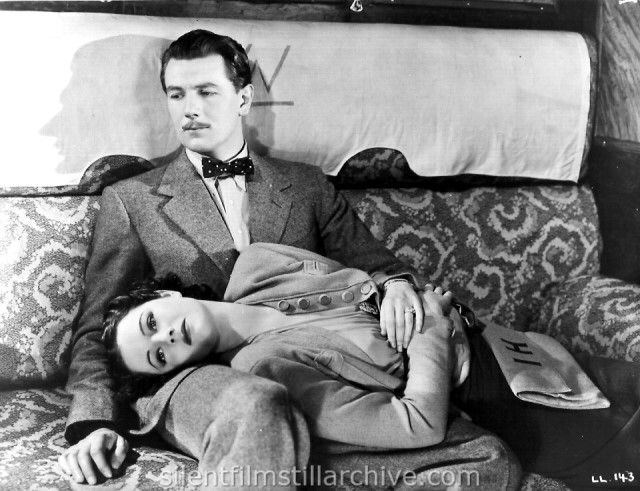
"That's it, darling. You rest and don't worry your pretty little head about things."
Romantic intrigue has been a staple of books and films for
many years, going as far back as Wilkie Collins’ The Moonstone and The Woman
In White (and probably before that as Jane
Eyre is something of a romantic intrigue), then up to Hitchcock’s wonderful
films of the 30s, 40s and 50s, where the intrigue invariably involved a romance
of some kind. The Lady Vanishes is
one of my all time favourites, but Rebecca
comes a close second. But for real intrigue and melodrama Gaslight, starring the wonderful Ingrid Bergman and the very
underrated Joseph Cotton (who I wouldn’t say no to), beats them all. Charles
Boyer’s increasingly unhinged role as the husband who is supposed to be driving his wife insane is a bravura performance and
illustrates just how ‘good’ a bad guy has to be to up the psychological quotient.

"You may have murdered your first wife, but all you needed to redeem you was the love of a woman who is so unimportant she doesn't even have a first name."
Of course, nowadays, women are not depicted as the victims
of scheming husbands, and neither do they have their fears dismissed as
hysterical ramblings. Much. They don't sit around waiting for things to happen to them. They go out and meet trouble head on. I pride myself on my heroines being quite feisty and even
if they turn to the hero for help, it’s as a last resort, and not because they’re
too weak to deal with problems themselves.

"Admit it, you forgot to alphabetise my CD collection again, didn't you? I suppose I'll have to do it all myself, as usual!"
My first published pocket novel, The Secret of Helena’s Bay, was my first proper attempt at romantic
intrigue. Though having a contemporary setting, I wanted to give it the feel of
a film starring Cary Grant and Audrey Hepburn. I threw in the lot. A missing
old man (a homage to the missing lady in The
Lady Vanishes), Nazis (it is my belief that you can never have too many Nazis
in a story of romantic intrigue) henchmen (ditto) and, of course, the McGuffin,
which in this case was a set of rubies stolen from the chalice in a Greek
church (more on the McGuffin later). I even had two elderly ladies called
Caldicot and Charters, as a nod towards the cricket loving gentleman in The Lady Vanishes. In truth I borrowed
from everywhere and left no romantic intrigue cliché unturned. And I loved every
minute of writing it. And my latest novella, Mistletoe and Mystery is also a romantic intrique, though this time it involves cat burglars and missing schoolgirls (not a Nazi in sight, unfortunately).
So what do you need to write a romantic intrigue? I’ve
mentioned a few things, but I’ll list them properly, with explanations.
Hero and heroine conflicted: This is
important. In any romance, as I stated in a previous post, there will be an internal and
external conflict that keeps the hero and heroine apart. We’re back to our
Bruce and his vested interest again.

For the half a dozen people out there who don't know what Bruce Willis looks like in his vest
In romantic intrigue, the intrigue is generally
the main external conflict. But as I said in that blog post, one has to
compliment the other. So in romantic intrigue it helps if, for some reason, your hero and heroine
distrust each other (or you could have just one distrusting the other). At the
same time, they’re fighting against the growing attraction/love that they’re
feeling. Can this person really be involved in the theft of Lady Wotsit’s cameo
brooch inside which are hidden secret Nazi files? The mystery they face must
have some bearing on their romance, and not just be something tagged on to add
a few more thousand words.
A mystery: It goes without saying that there needs to be
some sort of mystery to solve. Solving that mystery might even bring your hero
and heroine together, or if one suspects the other, tears them apart, until the
final happy ending.
Suspicious behaviour: Several of your characters, maybe even including the
hero and heroine, have to be seen to be behaving suspiciously. At the end there’s
always a perfectly reasonable explanation, but keep the reader guessing.
A compelling and realistic bad guy/girl. As Charles Boyer
showed in Gaslight, the bad guy or girl in any story has to be compelling. Of
course, unless you’re writing a story where the bad guy is clear from the outset
(and I’ve done that) you may hint at several people being the antagonist. But
by the time the real villain is exposed, their motive must be plausible and they
must receive a suitable punishment. I find throwing them off a cliff during a
life or death struggle with the hero/heroine quite satisfying, even if it is a
bit clichéd.
A McGuffin: The McGuffin is my favourite part of writing
romantic intrigue, but probably one of the hardest to come up with. To explain,
a McGuffin is an object that drives the plot and makes characters behave in the way they
do, but is not important in its own right (The TV Tropes page explains it in more detail and gives examples). It has no particular importance
outside the story. In The Maltese Falcon,
it’s the falcon which drives everyone. It does not necessarily have to be a
physical thing. It can be a secret inside someone’s head. In The Lady Vanishes, it’s the tune that
the missing lady in question has in her head . And remember the Memory Man in The 39 Steps? To prove that the McGuffin
could be absolutely anything, when I wrote My
True Companion (which will be in libraries from 1st January 2012)
I knew there were secret documents, but I had no idea what was in those secret
documents until my heroine found them. It could have been the secret ingredient
in KFC or Coca Cola, but was actually a secret weapon (that being more in
fitting with the story I’d told so far). Similarly, in Sunlit Secrets, which is not quite a romantic intrigue, but has
lots of secrets, I had no idea what my hero’s secret was until he revealed all
to the heroine partway through the book.
A satisfying resolution: As well as your usual happy ever
after for the hero and heroine, everything else about a romantic intrigue story
has to be satisfying too. All loose ends must be tied up, bad guys/girls must
be suitably punished, and the reader should not be left with any questions
about what went on. Anyone who’s read Agatha Christie will know that this sort
of reveal usually takes place with everyone sitting in a plush drawing room, as
Poirot or Miss Marple tell each of them why they’ve been keeping a secret (as
if they didn’t know). I generally cover this by having one of my characters ask
the hero or heroine something like, ‘So what exactly has gone on here?’ In that
way I can have my hero/heroine (it’s usually the heroine in my novels) give a précis
of what’s happened, so that it clears up any confusion the reader might feel.
In a lot of ways it helps me too, because if the heroine can’t explain it in
relatively simple terms, that means I’ve messed up somewhere.
You may have to do this more than once, just as a reminder
of what’s going on. Think of the précis as being a bit like the old films where
part way through, the hero (and it was always the hero in those days) brings us up to speed.

"Well, Miss Jones, my annoyingly screechy love interest, who is looking utterly gorgeous in her wet skirt and undone-blouse-that-shows-just-enough-cleavage-whilst-rather-phallic-snakes-thrust-towards-your-groin-area. We’ve swum through the River of Crawling Death (we really should have known from the name not to get in) – where I had to save you TWICE. We tracked down Professor E. Ville and discovered the location of the secret Nazi weapon. Now we need to make sure it never sees the light of day. But first let me one-handedly grapple these last few snakes, whilst I keep the other hand dangerously close to your bosom. Because I'm a man and that's what men do. No, don't try to help me. You just stand there half-naked and scream - just like you always do."
It’s a way of bringing the reader or viewer up to speed. But hopefully you can do it in a way that’s not quite as clumsy.
The most important thing is that it all hangs together in the end. The romance must be tied up somehow in the outcome of the intrigue, in much the same was as any external conflict needs to inform the internal conflict.
The most important thing is that it all hangs together in the end. The romance must be tied up somehow in the outcome of the intrigue, in much the same was as any external conflict needs to inform the internal conflict.
If you’d like to see how I write romantic intrigue, it just
so happens that my latest novella, Mistletoe
and Mystery is in the shops from today. It has pretty much everything I’ve
listed above, including a McGuffin, though I carelessly left out Nazis and
their henchmen again. I promise to try harder next time, honest.
But the hero, Matt Cassell is inspired by Matt Damon so that’s a bonus.
There is also a chance to win a signed copy over on my blog. I can't promise it's the perfect story of romantic intrigue, but I had a lot of fun writing it, so I hope you'll have a lot of fun reading it.

Just because...
Saturday, 10 December 2011
Large print copy of The Secret of Helena's Bay up for grabs

Just a quickie to let everyone know that I've got a prize draw on my blog to win a first prize of a signed copy of The Secret of Helena's Bay (my first ever pocket novel) and a runner up prize of my ebook, The Ghost of Christmas Past. The draw closes this Tuesday, 13th December at 5pm.Even though Helena's Bay is from the days when pocket novels were only 30k, it does give an idea of the sort of stories they like.
Saturday, 26 November 2011
Serendipity!

It's amazing how things work out with ideas for pocket novels sometimes. I'd had an idea about writing a novella about a young couple who'd been childhood sweethearts (I mean real childhood as in them being about ten years old at the time) but were separated for some mysterious reason then reunited as adults where they solve a crime together (and fall in love as grown ups of course). I'd already decided that the hero was going to be inspired by young actor, Iwan Rheon, pictured above, who has the most wonderful innocent eyes. He'll probably be the youngest hero I've ever written about, at 26 or 27. Younger than my own son ... eeek!
Anyway, I hadn't thought of the hero and heroine's names yet, and with me, until I have a name, I don't have a character or story. So when I went to bed the other night I started tapping a few ideas into my iPad to save what I'd thought of so far. I got as far as 'reunited'. In fact I only got as far as 'reu', and the iPad decided to auto-complete it as 'Reuben'. I knew in that instant that Reuben was going to be the name of my hero. It told me so much about who he was and where he came from. As soon as I had his name, the heroine's name popped into my head. Kate. Reuben and Kate. They sound so good together. I haven't decided yet whether to shorten Reuben to Rube, but I think I prefer Reuben. Then that led to more ideas about the story - which obviously I'm not going to give away here!
But I post this to illustrate how sometimes serendipity plays a major part in writing.
Saturday, 19 November 2011
100k in 100days group on Festival of Romance
My lovely fellow Pocketeer, Kate Allan, kindly invited me to set up a 100k in 100 days group at the Festival of Romance site. Please do come and join in, and invite all your friends.
100k in 100days on The Festival of Romance site.
100k in 100days on The Festival of Romance site.
Friday, 18 November 2011
Fancy writing two 50k pocket novels in 100 days?

Of course you don't have to write 2 pocket novels. You can write 1 pocket novel and a whole bunch of stories. Or you can write whatever you want as long as it's creative writing. But this being a pocket novel blog, I reckon pocket novels are the way to go. I'll be writing at least one. My suggestions for what you can get out of your 100k words are here. And there's a Facebook events page here.
And the picture of Hugh Jackman? Well he's just there to inspire your New Year's resolution. If you don't do it I'll send him around ... no, that's not it. If you do succeed I'll send him around (disclaimer: promises made by Sally Quilford regarding Hugh Jackman are not legally binding).
Saturday, 12 November 2011
A Weekend Heartwarmer
Something to make you go awww. Watch right to the end for the full effect and when you've stopped crying tell me if you agree the man and woman would make a lovely pocket novel couple (he's very fit actually ... sigh...)
Saturday, 5 November 2011
Sally's Heroes #1
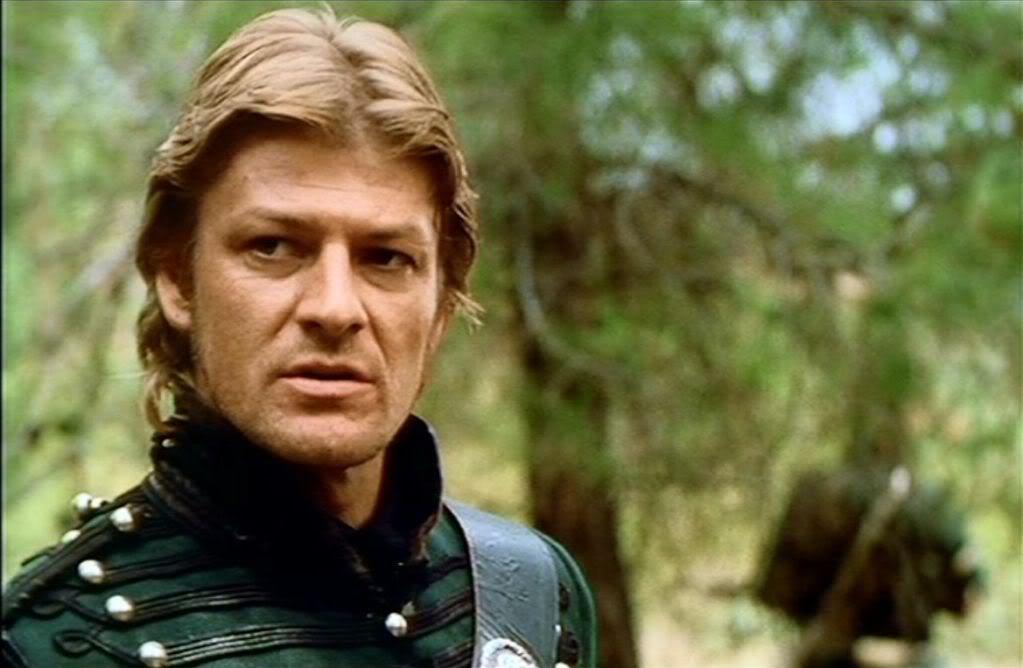
Sharpe: Wondering whether to storm a castle or go to bed with the 'female of the week'. Knowing him, he'll do both!
This week's hero is the gorgeous Sean Bean as Richard Sharpe.
Sharpe is my kind of man. He's worked his way up through the ranks, despite resentment from his fellow officers and his own class, and he doesn't suffer fools gladly. He's got an eye for a pretty face, but always behaves as much more of a gentleman than those who were born 'gentlemen'. He's also a loyal friend and not afraid to go the front when there's trouble, unlike many of the officers. He's also a tortured hero. His first wife, Teresa, died, and his second wife, Jane, stole all his money and went off with that bloke from Buffy and Angel. Then his third wife died. If ever a man needed a cuddle...
I often use actors as a template for my heroes. I haven't published anything with Sean as the hero yet, but he is one of my Derbyshire Hunks, the three gorgeous brothers of my intended serial (yes, I know Sean is from Yorkshire, but it's near enough for me.), along with Richard Armitage and David Morrissey. Sean has inspired Jack Henderson, the eldest of the brothers, and even though it's a contemporary story I am going to try and give Jack some of Sharpe's heroism and gentlemanly conduct.
The great thing about using actors as templates is that you never forgot how you've described them. Plus, you can still give them whatever personality you want them to have. One drawback, however, is that if your reader doesn't have the same tastes as you, and they know who you've used for the template, it can spoil their reading experience.
So, who are your favourite fictional or real heroes? And do you ever use them as templates for characters?

Sharpe and the 'female of the week' after he's stormed the castle (yes, that is Liz Hurley)
Subscribe to:
Posts (Atom)